


Careem: Taxi, Food & Delivery
Careem
I judge Careem: Taxi, Food & Delivery less by its long list of services than by what happens when I need one of them at an inconvenient moment. It is a free Maps & Navigation app from Careem, designed for people who want transportation, meals, groceries, bill payments, and money transfers gathered in one mobile place. That combination can be genuinely useful, but it also makes the quality of the experience closely tied to connectivity, location accuracy, and how quickly the app can exchange information with its services.
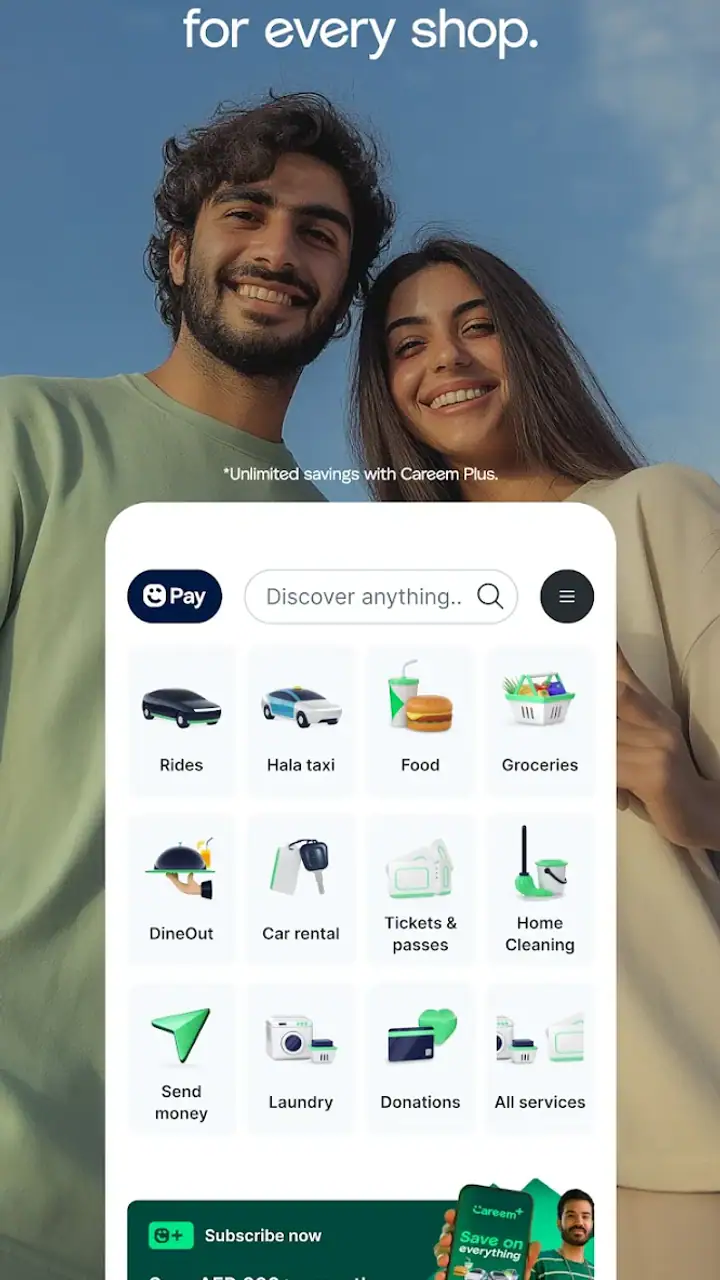
In my experience, the strongest reason to keep Careem installed is convenience across everyday errands. I can think about a ride, food, or a grocery order without switching between several unrelated apps. The trade-off is that an all-in-one app can feel busier than a focused taxi application. If I only want a simple trip from one address to another, the extra services may feel like visual noise. If I regularly use several parts of the Careem ecosystem, however, that broader design starts to make sense.
How Careem feels when every request depends on a connection
The app’s main jobs require communication between my phone, Careem’s systems, and the people or businesses involved in fulfilling a request. A ride needs current location information and trip updates. A food or grocery order needs changing status details. Payments and money transfers also depend on the app being able to send and receive confirmation. That makes a stable connection more than a convenience; it is part of the basic workflow.
This becomes noticeable during the first few seconds of use. When I open the app in a strong-signal area, the experience feels direct: I can choose the service I need, enter or confirm details, and continue. In a weak-signal area, the same actions can feel uncertain because I am waiting for information rather than simply reading something already stored on the phone. I am more careful in those moments, especially before confirming a ride or placing an order.
For transportation, connectivity affects more than the initial booking. The pickup point, driver progress, and trip communication all make more sense when updates arrive promptly. If the map position appears slow to refresh, I do not assume the driver is stationary or lost; I first consider whether the phone has a poor connection or whether location data is taking time to settle. That small habit prevents unnecessary messages and avoids changing a request too quickly.
Latest News

Uber Eats Under Pressure: What Happens When Delivery Goes Wrong

How QR & Barcode Scanner Adapts to Android and iOS Innovations

Why Waze Navigation & Live Traffic Is Your Essential Travel Companion

CapCut Mastery: Unleash Hidden Features for Pro-Level Editing

How OS Updates Enhance Roblox Adventures

Teacher Simulator: Exam Time Turns Quick Classroom Judgments into a Repetitive Loop
Food and grocery use has a different rhythm. I can browse and make choices at my own pace, but the order still moves through several stages after I submit it. A delayed update can make the process feel less reliable even when the order itself is progressing normally. I prefer to place these orders when I have enough time to wait for status changes rather than when I am already rushing out the door.
What the all-in-one design adds to daily routines
The practical advantage is not simply having many icons in one app. It is the ability to move between related needs without rebuilding my digital routine each time. A ride can solve the transport side of an evening, while food or grocery delivery can handle what happens after I arrive home. Bill payments and money transfers extend the app beyond travel, which may appeal to someone who wants fewer separate accounts and interfaces to manage.
That breadth also creates a useful decision point: I can choose the service based on the situation instead of defaulting to a separate app for every task. For example, if I am leaving work and realize I have no groceries, I can arrange transport and then deal with the household order from the same general environment. I still need to check the details carefully, but the transition is less disruptive than starting from scratch elsewhere.
Gallery
My main reservation is focus. A specialist taxi app may feel quicker when the only goal is a ride, while a specialist delivery app may offer a more concentrated browsing experience for food. Careem is better suited to people who value consolidation. It is less compelling for someone who already has a preferred provider for each category and does not want a multi-purpose interface.
Using it while moving through real places
Careem is most useful in mobile situations where I am not sitting at a desk with time to compare every option. A pickup outside an office, a ride from a busy shopping area, or a grocery order made while commuting all benefit from having the service available on a phone. The app’s Maps & Navigation classification reflects that practical role, although its wider functions make it more than a traditional map tool.
I try to prepare the important part of a request before I reach a crowded or unreliable location. Entering a precise pickup description, checking the map pin, and reviewing the destination while I have a good signal can reduce confusion later. This is particularly helpful at large buildings, malls, and transport hubs, where the visible entrance may not match the point shown on a map.
A realistic example is leaving an appointment in the evening with a low phone battery and an inconsistent connection. I would open the app before walking outside, confirm the pickup area, and avoid making last-second edits while standing among traffic and other pedestrians. Once the ride is requested, I would keep the phone accessible for updates rather than putting it away immediately. That workflow is simple, but it reduces the chance of missing an important change.
The same principle applies to delivery. I would choose an address and add useful location context while indoors, then make sure the phone can receive updates. When the courier is close, a vague address becomes more troublesome if I cannot respond quickly. Careem can simplify the order, but it cannot remove the physical challenge of finding the correct entrance or meeting point.
When something goes wrong and how I handle the uncertainty
The most frustrating moments are not necessarily complete failures. A request that appears to pause, a map that updates slowly, or a confirmation that takes longer than expected creates doubt. I have learned not to tap the same control repeatedly in those situations. Repeating an action can make it harder to know whether the first attempt succeeded.
My preferred recovery routine is to pause, check whether the phone still has a working connection, and look for a changed status before trying again. If the request concerns a ride, I also verify the pickup point and destination instead of assuming the app retained every edit. For an order or payment-related action, I am especially cautious about submitting again until I understand the current state.
This is where a focused alternative can sometimes be better. A dedicated taxi application may make a transport problem easier to isolate, while a separate payment service may provide a clearer record for a financial task. Careem’s advantage is having multiple needs together, but that also means one connectivity problem can interrupt several kinds of activity in the same place.
I also would not rely on the app as my only plan for a time-critical journey. If I must reach an airport, appointment, or exam at a fixed time, I leave a buffer and keep basic address information available in another form. That is not a criticism unique to Careem; mobile booking always involves network, battery, location, and availability variables. Still, the app encourages an on-demand mindset, so I think it is important to keep a backup habit.
Another useful habit is separating a service problem from a phone problem. If the map is not behaving, I check location access and signal conditions before concluding that the booking system is at fault. If the app responds but a driver or order status does not change, I give the process a moment before making a new request. This distinction saves time and avoids accidental duplicate actions.
Keeping mobile use practical without wasting attention
Careem is not an app I would open casually on a limited connection just to browse. Ride requests, menus, grocery selections, and account-related tasks all involve moving through several screens, so I prefer using it when I can concentrate. A stable connection makes the experience feel lighter because I am not repeatedly waiting for pages or status information.
For data-conscious use, I would prepare choices before starting a request. Knowing the destination, pickup point, meal, or grocery list reduces the time spent moving through the app. I also avoid refreshing repeatedly when an update is slow. A refresh habit may consume attention without producing a better result, especially when the delay is caused by the network rather than the screen itself.
Maps and live status information are naturally more demanding than reading a static page, so I treat them as active mobile tasks. I keep the phone charged before a long travel day and avoid beginning a complicated order while walking. These are ordinary precautions, but they matter more in an app where the phone may need to remain connected throughout the process.
The all-in-one format can reduce app switching, which is a genuine efficiency benefit. At the same time, it can encourage me to keep several tasks open in my mind: transport, food, groceries, bills, and transfers. I get better results when I finish one important action and confirm its state before moving to another. That is especially valuable when the connection is inconsistent.
Careem is free to download and use as an app, which lowers the barrier to trying it. The cost of any particular service is a separate practical consideration that I would review on the relevant confirmation screen before committing. I would not treat the word “free” as meaning that rides, meals, groceries, or financial transactions themselves have no cost.
Who benefits most from this setup
I see the clearest fit for people in the MENA region who want one familiar app for several routine services. Someone who orders food, occasionally needs a ride, and also values grocery or bill-related tools may appreciate the reduced need to maintain separate apps. Families and busy professionals can benefit from that centralization when their phone connection is dependable.
It is also useful for a person who moves between different daily contexts. The app can follow a routine from commuting to eating at home, rather than forcing each step into a different service. That does not guarantee every feature will be equally important to every user, but the range gives the installation a better chance of earning a permanent place on the phone.
I would be more hesitant to recommend it to someone with unreliable mobile service, limited storage, or a strong preference for single-purpose apps. A user who only needs occasional navigation may find a dedicated map more suitable. Someone who already trusts a particular food delivery service may not gain much by changing. Careem is strongest when its combined scope matches the way a person actually spends their day.
Parents and less technical users may appreciate having familiar tasks in one place, but I would still encourage them to review pickup details, delivery instructions, and payment information carefully. Consolidation is convenient, yet it means more kinds of personal activity may be managed through one account. The benefit is simplicity; the responsibility is paying attention to which service is active before confirming.
Performance, maturity, and what to expect from the app
Careem has been available since April 26, 2013, and its current version is 26.19. That history gives it the feel of an established service rather than a new experiment. The app has an average rating of 4.2 from around 1.4 million ratings, with over 50 million installs. Those figures suggest broad adoption, though they do not guarantee that every city, connection, device, or service category will feel identical.
Its content rating is Everyone, and the minimum operating-system requirement is Android 8.0. That makes it accessible to many Android users, while still leaving older phones outside the supported range. Before planning around it, I would check the device’s Android version and make sure there is enough battery for a ride or delivery session.
The developer is Careem, a name that is closely associated with the app’s multi-service identity. I like that the product’s purpose is easy to understand once I look beyond the individual tools: it is built around everyday movement and errands rather than one isolated task. The challenge is that such a broad purpose requires me to learn where each function lives.
Compared with the usual alternatives, Careem’s most meaningful difference is not a single navigation trick or a special delivery screen. It is the possibility of handling transport, food, shopping, bills, and money transfers within one broader service. A taxi specialist may be more focused, a food specialist may be better for restaurant discovery, and a conventional map may be better for independent route planning. Careem wins when reducing those switches matters more than having the deepest tool in every category.
My practical verdict on connectivity and convenience
I recommend Careem to readers who want a versatile mobile service and usually have a reliable connection. Its value appears in the transitions between needs: arranging a ride, sorting out food, buying groceries, paying a bill, or sending money without rebuilding the routine each time. The app feels especially appropriate for busy urban life, where the phone is already the main tool for coordinating movement and errands.
I would not choose it as my only solution for a high-stakes journey or a situation where I cannot tolerate waiting for network updates. I would also skip it if I only want a minimalist taxi interface and have no interest in the other services. In those cases, a focused alternative can be clearer and less distracting.
For everyone else, my advice is to use it deliberately: confirm the map pin, prepare requests while the signal is strong, avoid repeated taps during delays, and leave time for recovery when a trip matters. With those habits, the connectivity requirement feels manageable rather than surprising. Careem is at its best when convenience and dependable mobile access work together.
After reviewing it as an everyday app rather than just a ride-booking tool, I see a balanced proposition. It is free, broadly adopted, and unusually wide in scope, but that scope brings a busier interface and a greater dependence on timely updates. If your routine benefits from one connected place for transport and errands, I think it is worth trying. If you prefer specialized apps or often work with weak connectivity, its all-in-one design may feel like more compromise than convenience.
FAQs for Careem: Taxi, Food & Delivery
What services does the Careem app offer?
Careem is a versatile app providing a range of services including ride-hailing, food delivery, and package delivery. Users can book a taxi, order food from local restaurants, or have parcels delivered within their city. The app aims to offer convenience by integrating multiple services into one platform, making daily tasks easier.
Is Careem available in my city?
Careem operates in numerous cities across the Middle East, North Africa, and South Asia. To check availability in your area, you can visit their website or download the app and enter your location. The app will automatically show available services in your city if supported.
How can I pay for services on Careem?
Careem offers flexible payment options including cash, credit/debit cards, and digital wallets. Users can add their preferred payment method in the app’s settings. The app securely processes payments, ensuring a hassle-free experience whether you’re booking a ride or ordering food.
Does Careem offer any promotions or discounts?
Yes, Careem frequently offers promotions and discounts to enhance user experience. These can include discounted rides, free delivery on food orders, or promotional codes for new users. Keep an eye on the app notifications and their social media channels for the latest offers and deals.
What safety measures does Careem have in place?
Careem prioritizes user safety with features like real-time tracking, driver ratings, and an in-app emergency button. They also conduct thorough background checks on drivers and require them to follow strict health and safety protocols. These measures ensure a secure and reliable service for all users.
Pros
- User-friendly interface for easy navigation.
- Multiple services in one app: ride
- food
- delivery.
- Real-time tracking for rides and orders.
- Various payment options including cash and card.
- Loyalty rewards program for frequent users.
Cons
- Limited service availability in some regions.
- Occasional app glitches reported by users.
- Customer support can be slow at times.
- Pricing can vary significantly during peak hours.
- Delivery options may have limited restaurant choices.


